

Picture books by Michael Westmore
Into the wood
Little Explorers
Stories where nature is the hero, for children who would rather be outside, and the ones who don't know it yet.
Stories where nature is the hero, for children who would rather be outside, and the ones who don't know it yet.

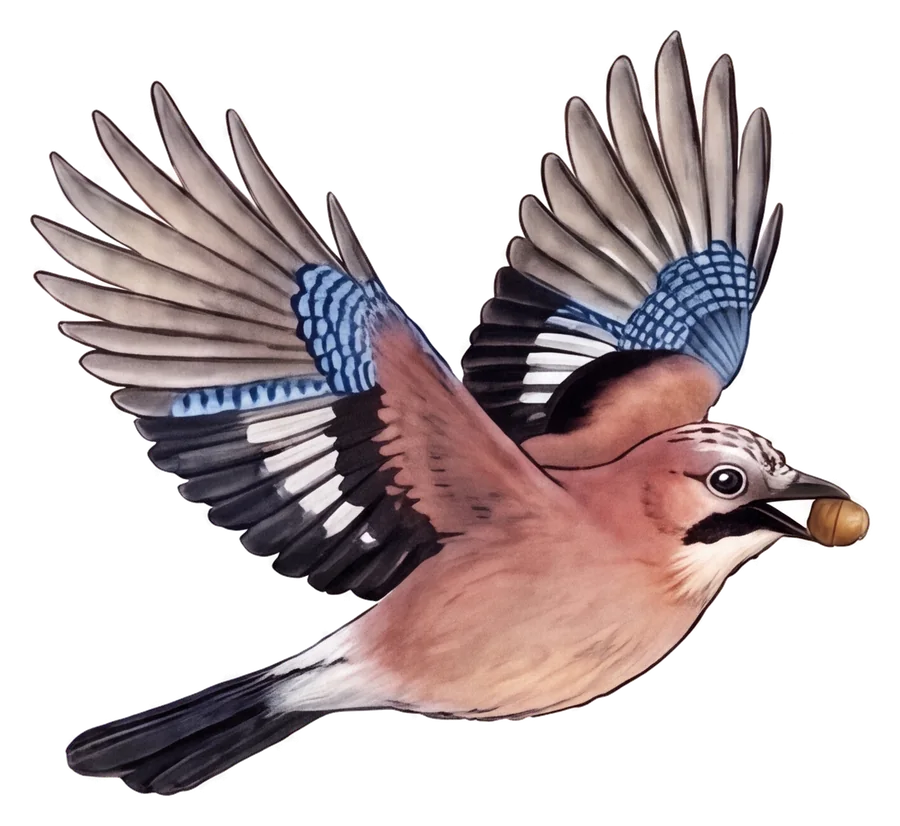
Jay has one job before winter. Bury four hundred acorns, and remember where they are.
He does the first part brilliantly. The second part, not so much. When the snow comes he can't find a single one, and while he sits in the cold feeling useless, something is quietly happening under the ground.
Real jays do this. One jay can bury thousands of acorns in an autumn and forget plenty of them. That is how oak woods have spread across Britain for thousands of years.


Four hundred acorns, buried one at a time. Dig a hole, push it in, pat the soil, off for the next one.
Snow covers everything. Jay digs and digs and finds nothing at all.
While Jay worries up above, the forgotten acorns get on with it. Roots go down. Shoots start up.
Every acorn Jay lost pokes up through the leaves. Hundreds of tiny trees, and he planted the lot.
Shade for the deer, a hole for the owl, a fox in the ferns and bluebells in May. All from one forgetful bird.
Nature is the hero. Every time.
I created these books because I want children to fall in love with nature.
Not just to learn about it, but to feel drawn to it. To put the screen down, pull on their shoes and go and see what is actually out there. Climb trees. Look under logs. Get mud in their hair. Come home with a few bruises and at least one story that gives their parents something to worry about.
Because childhood should have a bit of dirt on it.
The stories are designed to carry gentle messages without preaching. Nature is always at the heart of them. It is the hero, the teacher and sometimes the healer. If a child finishes one of these books and wants to go outside and discover something for themselves, then the story has done its job.
I think modern life has slowly pulled us further away from the natural world, yet nature gives us so much of what modern life often takes away. Space. Curiosity. Perspective. Calm. Connection. A chance to switch off without actually switching something on.
And there is a bigger reason behind it too.
Children protect the things they love.
If we can help the next generation become excited by wildlife, trees, woodlands and the world outside their front door, then caring about biodiversity, climate change and the future of the planet becomes personal. Not because somebody told them they should care, but because they already do.
And who knows, perhaps along the way we might inspire a few new little gardeners, growers, farmers, foresters and nature lovers too. Children who grow up wanting to work with the land, understand it and look after it.
These books are the beginning of something I hope can become much bigger. A way of helping more children discover nature, get excited by it and feel that they are part of it.
If that means a few more muddy clothes, scraped knees and worried parents along the way, I think that is probably a fair trade.
And if, somewhere along the way, it helps make the world a little better too, then that feels like a journey worth taking.

Next time you're in a wood or a park, see how many of these you can spot. Tap each one when you find it. We'll remember for you.
All six found. That's more than most grown-ups notice in a year. Now pick a new wood and do it again.